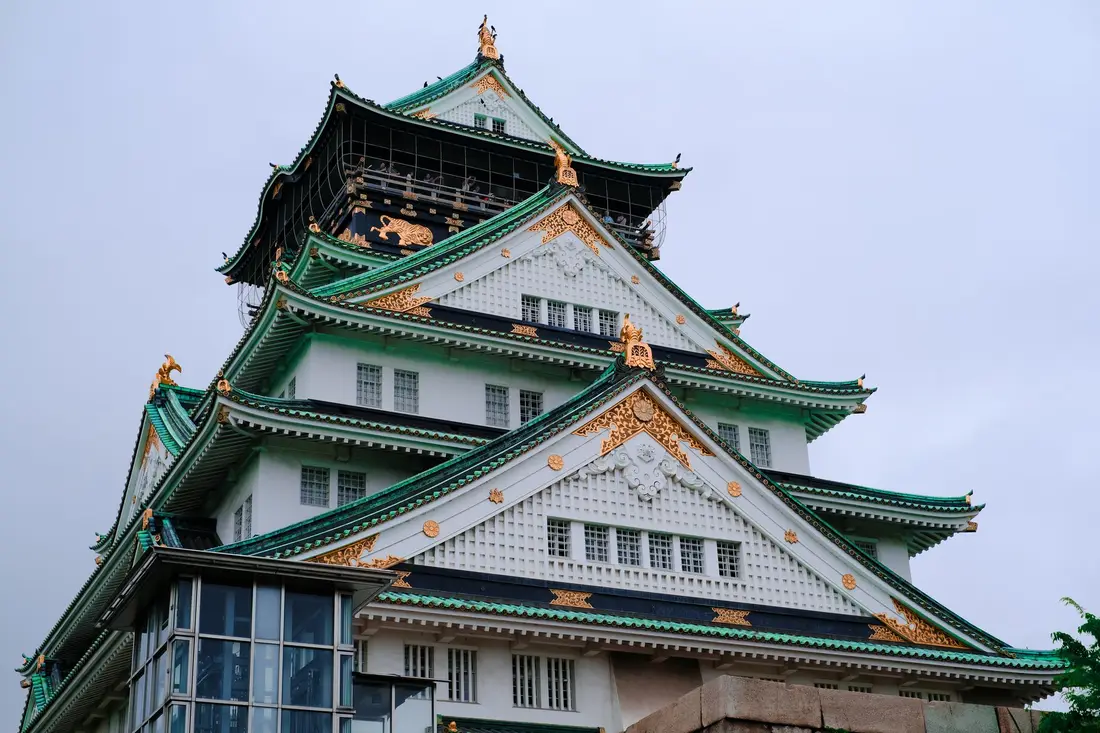
Osaka is Japan's kitchen and its most extroverted city - the neon canyon of Dotonbori, the retro Shinsekai district under Tsutenkaku tower, and street food you eat standing up, from takoyaki to kushikatsu. Osaka Castle and Kuromon Ichiba market fill the days, and Nara's temple deer or Kyoto are each under an hour away. Locals are famously chatty by Japanese standards, and eating until you drop (kuidaore) is the official pastime.
4-day Osaka itinerary
- Day 1: Osaka Castle and its park in the morning, graze through Kuromon Ichiba Market for lunch, Dotonbori and the Glico sign neon at night
- Day 2: Retro Shinsekai and Tsutenkaku tower, kushikatsu lunch at a Daruma branch, sunset from the Umeda Sky Building's open-air observatory
- Day 3: Sumiyoshi Taisha shrine and its arched bridge, Shinsaibashi and Amerikamura shopping, lantern-lit Hozenji Yokocho alley for dinner
- Day 4: Day trip to Nara - Todaiji's Great Buddha and the bowing deer of Nara Park - back to Osaka for a final izakaya crawl in Ura-Namba
Where to stay: neighborhoods that make sense
- Namba / Dotonbori (Minami)the neon, food and nightlife heart, loud and fun, most convenient first-timer base
- Umeda (Kita)the polished business and department store district around Osaka Station, best transport links and hotel deals
- Shinsekai / Tennojiretro, cheap and slightly scruffy with great-value food and the Spa World bath complex
- Nakazakicholow-rise lanes of vintage shops and indie cafes that survived the war, a calm pocket 10 minutes walk from Umeda
What to eat in Osaka
- Takoyakioctopus batter balls from a street stand like Wanaka or Kukuru, about 3.50-4.50 EUR for 8
- Okonomiyakithe savory cabbage pancake, queue at Mizuno in Dotonbori, about 8-11 EUR
- Kushikatsudeep-fried skewers at Daruma in Shinsekai, a set runs about 10-15 EUR, never double-dip the shared sauce
- Kaiten (conveyor) sushiplates from about 0.80-1.50 EUR at chains like Kura or Daiki Suisan
- Ramen or udon luncha solid bowl almost anywhere for 6-8 EUR, pay at the ticket machine first
Mistakes most first-timers make
- Eating only on the main Dotonbori stripone street back (Ura-Namba, Hozenji Yokocho) is cheaper and better, and many famous stands have shorter-queue branches
- Buying a nationwide JR Pass for a Kansai-only tripit rarely pays off, use an ICOCA card plus point-to-point tickets or a Kansai area pass instead
- Double-dipping kushikatsu skewers in the communal sauceit is the one food rule Osakans genuinely enforce, use the free cabbage to scoop extra sauce
- Cramming Osaka into a day trip from Kyotothe city comes alive at night, sleep here at least two nights for the evening food scene
Worth leaving the city for
- Nara (45 minutes by Kintetsu train)Todaiji temple's giant bronze Buddha and 1,200 free-roaming deer, an easy essential half day
- Kyoto (15-30 minutes by shinkansen or express)Fushimi Inari's torii gates and the old town, go early to beat crowds
- Himeji (30-60 minutes by train)Japan's most spectacular original castle, the White Heron, combine with Kobe beef for lunch on the way back
Getting around
From Kansai International Airport, the Nankai rapi:t or JR Kansai Airport Express reaches the center in 40-50 minutes for about 7-9 EUR. In town, get a rechargeable ICOCA card and use the metro at about 1.20-1.80 EUR per ride - an all-day Osaka Metro pass is around 5 EUR.
Why this plan won't send you to a closed café
Almawander is an AI travel planner that remembers you across trips - it learns your pace, budget, diet and taste, checks places are still open, and bakes in your passport's visa rules.