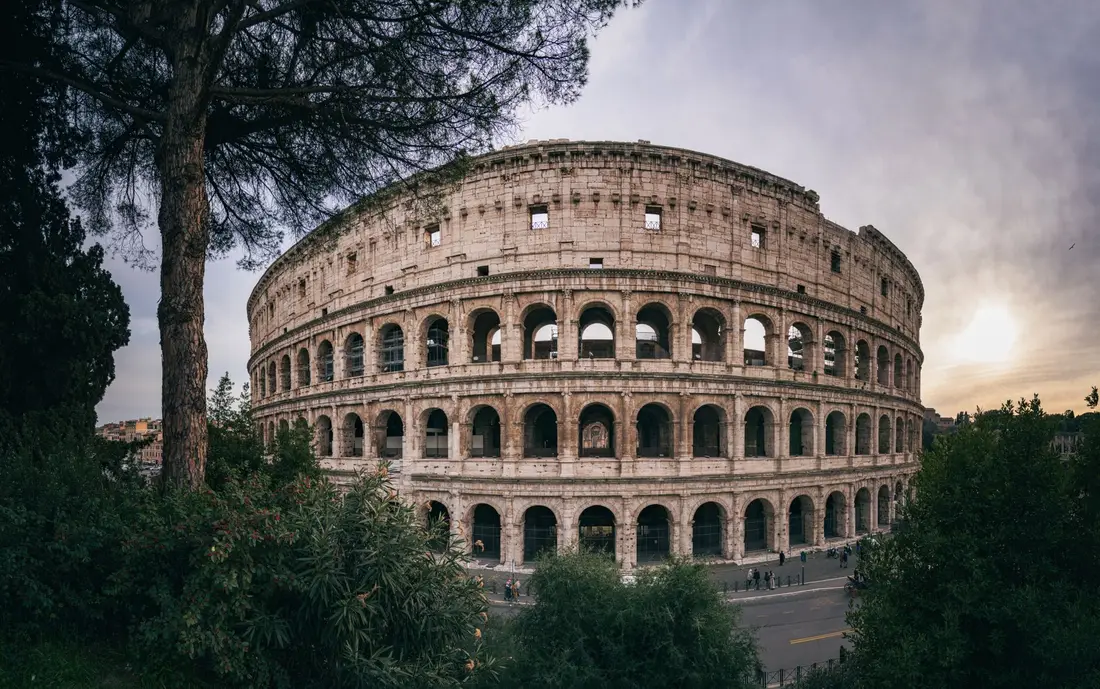
Quick answer: For a 4-day trip to Rome, budget about EUR 120 per day (mid-range). Best time: April-May and September-October - warm but not scorching, and thinner crowds than midsummer. Visa: Italy is in the Schengen Area - visa-free up to 90 days for US/UK and most EU-adjacent passports, but always check current rules for your passport.
Rome layers 2,000 years of history into a walkable center: you can stand inside the Colosseum in the morning and toss a coin into the Trevi Fountain by sunset. The Vatican Museums and the Pantheon deliver the blockbuster art, while evenings in Trastevere are for cacio e pepe and people-watching on cobbled lanes.
Best timeApril-May and September-October - warm but not scorching, and thinner crowds than midsummer
Budget / day~EUR 120
Suggested length4 days
VisaItaly is in the Schengen Area - visa-free up to 90 days for US/UK and most EU-adjacent passports, but always check current rules for your passport.
4-day Rome itinerary
- Day 1: Colosseum (book timed entry), Roman Forum, Palatine Hill, sunset from the Capitoline Hill terrace
- Day 2: Vatican Museums and Sistine Chapel (early slot), St Peter's Basilica, evening stroll through Prati
- Day 3: Pantheon, Piazza Navona, Trevi Fountain, dinner in Trastevere
- Day 4: Borghese Gallery (reservation required), Villa Borghese gardens, food crawl in Testaccio
Where to stay: neighborhoods that make sense
- Montivillage feel minutes from the Colosseum, wine bars and vintage shops, great first-timer base
- Trastevereivy-covered lanes and trattorias, lively at night, stay here for atmosphere over quiet
- Pratiorderly and residential near the Vatican, good value hotels and excellent food streets
- TestaccioRome's old slaughterhouse district, now its most serious food neighborhood, few tourists
What to eat in Rome
- Cacio e pepe in Trasteverepecorino and black pepper perfection, about 12 EUR a plate
- Pizza al taglio at Bonci Pizzarium near the Vaticansold by weight, about 5 EUR for a filling slice
- Suppli (fried rice balls) from a friggitoriathe classic Roman street snack, about 2 EUR each
- Carbonara in Testacciothe neighborhood that claims to do it best, 12-14 EUR
- Gelato at a shop that covers its tubs (a quality sign)about 3 EUR for two flavors
Mistakes most first-timers make
- Not booking the Colosseum, Vatican and Borghese Gallery in advance - same-day tickets often sell out or mean 2-hour lines
- Eating at restaurants with photo menus next to major sightswalk 5 minutes into a side street and prices drop by a third
- Cramming the Vatican and the Colosseum into one daythey are on opposite sides of the city and each takes half a day
- Forgetting to validate paper transit tickets in the yellow machines - inspectors fine on the spot, around 50 EUR
Worth leaving the city for
- Ostia Antica (30-40 min by train)remarkably preserved ancient Roman port city with a fraction of Pompeii's crowds
- Tivoli (about 1 hour)Villa d'Este's Renaissance fountains and Hadrian's sprawling villa
- Orvieto (about 1 hr 15 min by train)clifftop Umbrian town with a striking striped cathedral
Getting around
From Fiumicino, the Leonardo Express train reaches Termini in 32 minutes for 14 EUR. The center is best on foot; the metro (single ticket 1.50 EUR) covers the gaps to the Vatican and Colosseum.
Why this plan won't send you to a closed café
Almawander is an AI travel planner that remembers you across trips - it learns your pace, budget, diet and taste, checks places are still open, and bakes in your passport's visa rules.